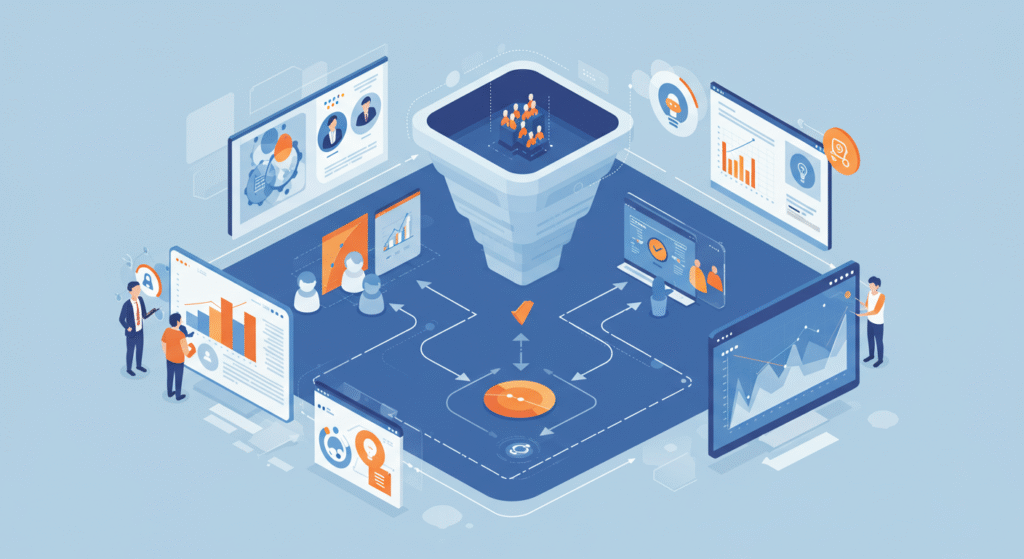
CRM and marketing automation in e-commerce start with knowing what data you have, not with choosing software. If you hold order history, product category and consent, you can build the first five flows today. If you do not, the most expensive platform on the market hands you an empty interface. This piece gives the order: data, then segmentation, then flows, then measurement.
1. Before automating: what data do you have?
The quality of your automation depends on how many events you can trigger from. Without the four below, every flow you build stays a newsletter sending the same message to the same list.
- Order history, broken down by product. Not just the total, but which category was bought when. All segmentation rests on this.
- On-site behaviour. Product viewed and product added to basket are the two highest-intent signals you get.
- Consent state, per channel. Email consent and SMS consent are different, and conflating them creates both legal and reputational exposure.
- Returns and support history. Sending a promotion the day after someone had a problem is the most visible way automation fails.

2. Segmentation: RFM and what it actually buys you
The most durable segmentation method is still the simplest: split customers by how recently they bought, how often, and how much. Build that before building anything complex, because most of the gain is there.
- New customers: one order so far. The only goal here is the second order, and the second order is the threshold that sets customer lifetime.
- Loyal customers: frequent and regular. Sending them a discount is unnecessary cost; early access and stock news work better.
- Lapsing: used to buy regularly and stopped. The only audience a win-back flow should target, and the message has to open with a reason rather than a discount.
- At-risk high value: spent a lot and have not been seen in a while. The most expensive group to lose and usually the least attended to.
Segment definitions need to live in one place. If the same segment is computed one way in email and another on the dashboard, two reports answer the same question differently and trust in both disappears.
3. The first five flows, in this order
Trying to build them all at once means none of them gets written properly. The order is by size of return.
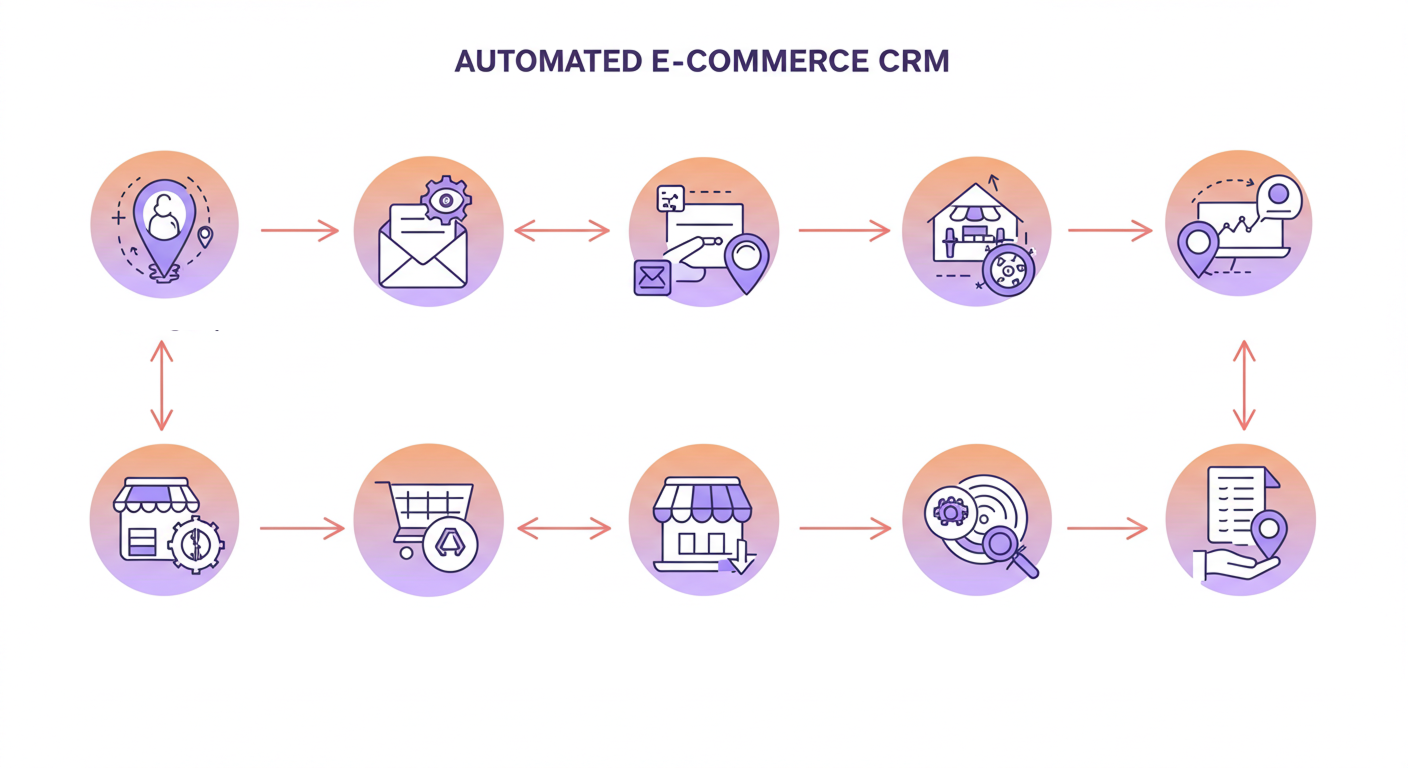
- Abandoned basket. The highest-intent audience there is. Build a two or three step sequence rather than one message, and do not put a discount in the first one.
- Abandoned product view. People who left without adding to basket. Wider than the basket flow, so the message has to be softer.
- Welcome sequence. The first two weeks after a first order are when a second order is most likely.
- Replenishment reminder. For consumables, timed to when they run out. Calculated per category, not from one global number of days.
- Win-back. To the lapsing segment, and only once the other four are running.
4. Email or SMS?
They exist for different jobs, and sending the same message down both is the fastest way to lose consent.
- Email: anything that needs explaining. Product introductions, the welcome sequence, content. Its low cost is also why it tolerates mistakes.
- SMS: time-sensitive and short. Delivery updates, back-in-stock alerts, last-day reminders. Every message costs, which forces selectivity.
- Set a frequency cap. Limit how many messages a customer can receive in a week regardless of channel, or the flows start stacking on top of each other.
5. The segment writes the message
Personalisation is not putting a first name at the top of an email. Real personalisation is the content of the message changing with the segment.
- Explain the product to a new customer, do not discount to them. They do not know the brand yet, so a discount sets a price expectation rather than a sense of value.
- Give loyal customers early access. A discount there is margin given away to someone who would have paid full price.
- Give the lapsing a reason. “We miss you” is not a reason. A new category, an improved service or the next version of what they bought is.
- Recommendations rest on catalog data. A product with the wrong category or empty attributes is one no recommendation rule can place correctly. You can check where your catalog stands with a free feed analysis.
6. Measurement: if not open rate, then what?
Open rate stopped being a reliable number once privacy protections started prefetching images. Whether automation is working has to be read elsewhere.
- Revenue per flow, separated from campaign revenue. All the value of automation is here, and it usually disappears inside the total.
- Second order rate. The only real measure of success for a welcome sequence.
- Time to first repeat purchase. It degrades weeks before monthly revenue does, which makes it an early warning.
- Unsubscribe rate per flow. Systematic exits from one flow point at either frequency or relevance.
7. The four most common mistakes
- Choosing the platform before the data. With nothing to feed it, the most sophisticated tool gets used as a newsletter sender.
- Putting a discount in every flow. The fastest way to train your best customers to wait for one, and what quietly erodes the margin.
- Building flows and never reading them again. An abandoned basket email written a year ago may be promoting a product you discontinued.
- Treating the list as one segment. Sending everyone the same campaign lowers the result and costs you consent.
8. Consent management is not a technical detail
The most neglected part of an automation setup is consent, and a mistake here costs far more than a campaign performing badly.
- Store consent per channel. Permission given for a newsletter is not permission for SMS. A single “marketing consent” field compresses two different states into one box.
- Record where and when it was given. When a complaint arrives, the question is not whether consent exists but where it came from and on what date.
- Keep transactional messages separate from marketing. Slipping a promotion into a delivery notification creates a marketing message sent without consent.
- Make leaving easy. An unsubscribe link that is hard to find produces spam complaints instead of unsubscribes, and that damages deliverability for your whole list.
Frequently asked questions
Which CRM platform should I choose?
The decision depends far more on how well it talks to your store than on a feature list. A platform that cannot pull order and product data in near real time computes segments late however rich its interface is. The question to ask before choosing: can this tool see my product-level breakdown?
Is automation worth it on a small list?
Yes, and usually more so. On a small list writing messages individually is still possible, so automation is how that quality survives growth. The abandoned basket flow also works regardless of list size.
How many flows should I start with?
One. Build the abandoned basket flow, read it for two weeks, then move to the second. Teams that build five at once tend to half-write all of them and cannot tell which one is working.
If you need someone to build the segmentation and the flows alongside the data work, that is what our growth and CRM side does. For a quick look, write to us.